
Episode 1 - Pre Diagnosis
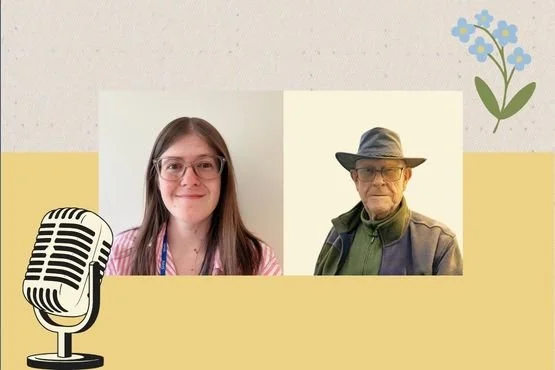
In this episode we talk about dementia pre-diagnosis with Dr Cara Webb and Pete Middleton.
Narrated by MDFR presenter Roger Hill
-
Roger: Hello, and welcome to The Dementia Download, brought to you by Merseyside Dementia Friendly Radio. For our first episode, we will begin at the beginning, bringing you pre-diagnostic advice, including how to spot the signs of dementia, seeking a diagnosis for ourselves, and how to encourage a loved one to seek a diagnosis. Then, our guests will walk us through the steps involved in the diagnosis process, including misdiagnoses and the personal benefits of being able to name the changes happening inside of us or those closest to us.
We want to be as comprehensive as possible. However, many of the Dementia Download's guests are based in Merseyside, United Kingdom. We have tried to keep our practical advice widely applicable. But medical services and provisions may vary according to your location. So, it is always worth checking with your local healthcare providers to clarify the finer details.
Today's guests are Doctor Cara Webb and Pete Middleton. Doctor Cara is a consultant psychiatrist based in Merseyside. She specialises in older adult psychiatry and has worked extensively with people living with dementia. Pete is a dementia activist and public speaker who was diagnosed with young-onset Alzheimer's disease a little over seven years ago and is dedicated to challenging dementia stereotypes. We will begin with a brief overview of what dementia is. Here is Doctor Cara's insight on dementia as a whole and the three most common variations.
Dr Cara: Dementia is an umbrella term for a progressive decline in someone's cognition. It can impact somebody's ability to carry out their day-to-day tasks. It is most commonly associated with memory problems, but it can also impact somebody's speech, their movements and mobility, their problem-solving and also their personality. There is a number of common types of dementia. Alzheimer's is the most common type that most people will have heard of. There is also vascular dementia and Lewy body dementia. There is a number of other dementias that are associated with other illnesses such as human immunodeficiency virus and many much more rarer dementias including frontotemporal dementia.
Roger: It is worth remembering that it is not only older people who develop dementia and it is not an inevitable part of growing old. According to the Alzheimer's Society, one in three people born today will develop it in their lifetime. Research shows that around one million people in the United Kingdom are living with it, and over 70,800 people are living with young-onset dementia, which is diagnosed in people showing symptoms before the age of 65. This echoes Pete's experience. His symptoms had an unexpected effect on his work-life long before he expected to retire.Pete: At the time I first noticed changes in me that concerned me, I was working as a police community support officer. And I became concerned that I had begun to miss meetings because I got the time wrong or I would go to the wrong place. And I just felt that I didn't have the capacity to manage my workload that I used to. And that worried me. I could not understand why. And my wife noticed as well that I didn't seem to be as capable as I used to be.
Roger: Spotting the signs of dementia early can have a huge impact on diagnosis, treatment and ultimately the enjoyment of our everyday lives. This episode focuses largely on the three most widespread dementias, but we will go into more detail about rare types in future episodes.
Dr Cara: So Alzheimer's dementia, the most common symptom here is the short term memory changes, which can then impact your day-to-day abilities to carry out tasks such as washing and dressing yourself. You may also notice some changes in your personality that other people around you may have commented upon. In vascular dementia, this can also present with memory problems. However, this is normally following a stroke. Lewy body dementia has a number of key symptoms. So these can include visual hallucinations where you may see things such as animals or people who are not there. It can also include having problems with moving and this can lead to falls and sometimes there can be some sleep disorders that are associated with this as well. It is not uncommon to have a mixed dementia which can have a number of many different symptoms associated to a number of different types of dementia.
Pete: I was diagnosed with the most boring and common of all dementias under the umbrella just over seven years ago. So I have got Alzheimer's disease. I am one of the 70 percent of people diagnosed. Alzheimer's is the most common form of dementia, so I am told.
Roger: So, now that we have a working idea of what dementia is, how can we spot the signs of it, either in ourselves or in those closest to us?
Dr Cara: Sometimes it may be the person themselves that is struggling and recognises some changes in their memory. Other times, particularly with Alzheimer's dementia, it is people around them, families, members and friends who may notice the changes rather than the person themselves. The common signs could include the memory loss itself. It could include changes in the person's ability to communicate. Sometimes because of that, the person may begin to become socially isolated and may withdraw from their normal activities.
Roger: A question that often arises for people who have spotted signs of dementia in a loved one is how can we communicate our concerns with them sensitively? This can take time, care and encouragement.
Dr Cara: If you think that a loved one or colleague might be showing signs of dementia, it can be challenging to approach the person. They may already be aware of some of the challenges but be embarrassed and not wanting to speak out about those. It can help if you talk to them about the benefits of being diagnosed earlier, being able to access support and help from services and also being able to start medication earlier on in the illness because we know that medications can slow down the progression and the worsening of the disease. Another way that can be supportive is to help people to go and see their General Practitioner and offer to attend an appointment with them if they are a little bit scared.
Pete: It is an awkward conversation to have with yourself or with someone else when you suspect there might be dementia involved in the equation. Very awkward. How do you introduce that topic to someone? Because people have the wrong idea about what memory loss is. But I think I would always say to someone now, you know, have you considered that you, you know, you might have a little bit of memory loss there but it may not be dementia. But listen, there is something wrong there. You should, you know, you are beginning to forget things. I suggest you go and see if you can get a referral to a memory clinic and they will sort it out. There are many reasons why you might be becoming a bit forgetful and they are not all dementia. It is nothing to worry about. But to get a diagnosis, the earlier you get one, the more can be done for you.Roger: Deciding to act on our concerns can be a challenging process in itself. Once we have made that choice, the diagnosis process can begin.
Dr Cara: If you have concerns that you might have a dementia, the first step would be going and speaking to your General Practitioner and they would then be able to arrange any further investigations or onward referral that is needed. Once you have contacted your General Practitioner, it would start with an initial appointment to express your concerns. The General Practitioner would then likely want to do some blood tests because there is a number of physical health changes that can present as memory loss. So those blood tests would typically include checking your thyroid, which is a gland in the neck. It would also include checking your iron and your vitamin levels as well and a number of other routine blood tests. Sometimes they may ask you to do a heart tracing. Other times this may be done after the referral to the memory clinic. And similarly, you may have a computed tomography or a magnetic resonance imaging scan of your head. This could also be done after you have been seen in the memory clinic.
Roger: Several conditions share traits with dementia. The rapid decline of oestrogen during menopause, for example, can cause brain fog and memory loss. Additionally, various infections such as urinary tract infections and pneumonia can cause delirium, characterised by a sudden state of extreme confusion. People with delirium might express abruptly altered beliefs or see things that are not physically there. The most obvious difference between these issues and dementia is the pace of onset. Dementia moves slowly, gradually changing a person's cognition. But these comparable conditions happen rapidly and can be reversed with the help of a suitable treatment plan. There are also many cases of dementia being confused with mood disorders, such as depression and anxiety. The symptoms can overlap so much that even General Practitioners occasionally confuse one for the other, leading to treatment plans based on a misdiagnosis. In fact, this very thing happened to Pete.
Pete: So I was taken to see the doctor in my state of distress, and after a short five minute appointment, the doctor decided that I had depression and anxiety, and I have since found out that that is the common misdiagnosis for people with young onset dementia. So he topped me up with industrial strength antidepressants and put me on long-term sick leave.
Roger: This, of course, did not work, and it was not until he was referred to an occupational therapist two years after his initial General Practitioner visit that he began to find answers.
Pete: I have learned now that I need to challenge them for my benefit and theirs, because they are not always right, but they can refer you to a specialist.
Roger: When other conditions and causes have been ruled out, a General Practitioner has access to a variety of resources that can help to determine whether dementia is likely to be present. There is no single test for dementia, but a diagnosis can be arrived at through a series of tests and assessments. One of these is the GPCOG, General Practitioner Assessment of Cognition, which is a quick and effective screening tool consisting of five short questions. The GPCOG begins by asking the participant to memorise a particular name and address, which they are asked to recall in question five. Participants are also asked to draw the hours and hands on a clock face, as well as to recount a recent news story. This, and similar assessments, typically include pen and paper questions, and are designed to test our short-term and long-term memory, attention span, communication and orientation. They can be administered by a General Practitioner or by a specialist in a memory clinic. However, to access a memory clinic, a General Practitioner referral is generally required. In most cases, if a General Practitioner suspects the presence of dementia, they will refer us to a specialist. Cara and Pete are here to talk to us about what to expect from these appointments.
Dr Cara: So it can vary depending on where you live and the service that you are referred to. Sometimes it might be a specialist nurse who you see initially. Other times it may be a psychiatrist or a doctor working within the psychiatry team. In order to prepare for the appointment, it is really important to write down any questions that you have or any worries that you have. It is also important to bring a loved one to the appointment with you so that they can help answer any questions that might be asked that you are unable to answer and also to have to hand a list of all the medications that you currently take. The appointment can take place in a number of different places. Sometimes it might be at the outpatient clinic of your local hospital. Other times it may be in your own home and rarely, if you are already living in 24-hour care, sometimes it may be done in a care home. The assessment will involve taking a full history of all of the problems that you have been having with your memory. It will also involve going a bit into the past, so trying to understand your upbringing, a little bit about all of your family members, some questions about your past medical history and also about your work and any previous education.
Pete: Occupational therapist sat down with me to introduce herself and within a couple of minutes she said, Pete, I think you may have dementia, mate. She said, you are just presenting in a way that I have seen before with dementia. Would you mind if we got a neurologist to speak to you and if we had some scans done? So I said, oh yes, please.
Roger: Waiting for a diagnosis can be a challenging time, full of increased anxiety, stress and confusion. There might be hundreds of questions we want to ask, like how long will the process take? How will the results be communicated? And in the meantime, how can we address the heightened emotions that come from waiting for what could be a life-changing conclusion?
Dr Cara: So it can vary locally, but hopefully you will have been diagnosed within six months of being referred. Sometimes the information would be given face to face in an appointment with either a doctor or a specialist nurse. Sometimes it may be given over the phone, but this generally would depend on your choice and preference. It can be really, really helpful to talk to friends and family. It is also important to write your feelings down and to put any questions down that you have. And there is also helplines for support and advice available, such as Age United Kingdom, the Alzheimer's Society as well.
Pete: So they got some scans done and the scans clearly showed deterioration and voids around my hippocampus due to the work of, you know, that amyloid plaque and Alzheimer's disease, a classic case. For me, diagnosis was the best thing that ever happened. And I would advise everybody who may have an inkling that there is something wrong or that someone in their family may be experiencing memory problems, to get it checked, go to a memory clinic. You know, certainty is the thing, isn't it? Because with a bit of certainty, you get a plan. And I think that is what we all need.Roger: That marks the end of our very first episode. Thanks for listening. And thanks so much to Cara and Pete for taking the time to talk to us. Next month, we will be covering post-diagnosis. For more information about services and support, you can contact the Age United Kingdom helpline on 0800 678 1602. Lines are open from 8am to 7pm, 365 days a year. You can also find lots of valuable information about dementia at dementiauk.org and alzheimers.org.uk. The Dementia Download was brought to you by Merseyside Dementia Friendly Radio. This episode was presented by me, Roger Hill, with a script by Alicia Riley, produced and edited by Nat Gavin. The music you have heard in this episode was played by Don Beecham, a 90-year-old resident of Turner Home, living with dementia. The Dementia Download podcast is made possible by a grant from the National Lottery Community Fund. If you have any questions, suggestions or feedback about the podcast please contact hello@mdfr.co.uk . We look forward to seeing you next time. Bye for now.
